The coffeehouse journals II: the rise of the British coffeehouse

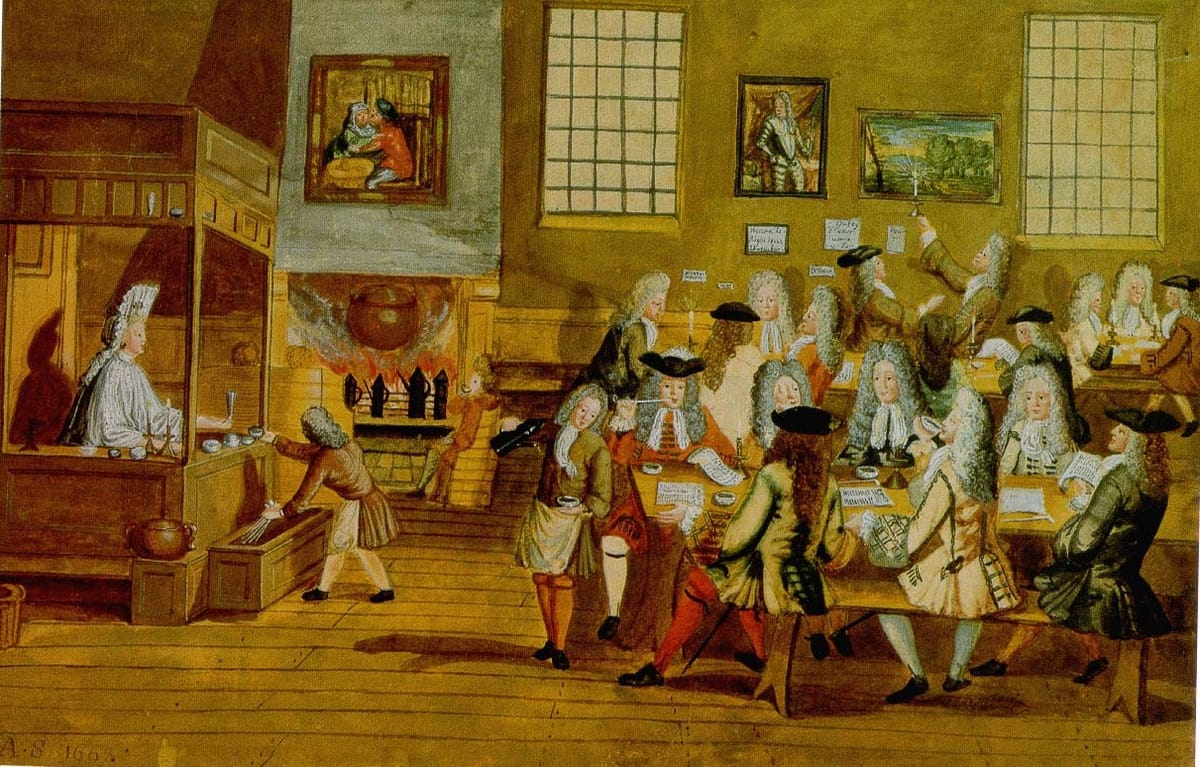
Few drinks are as closely tied to English identity as tea. However, it wasn't always so. Believe it or not, England was one of the first countries outside the Levant to embrace the coffeehouse and make it its own. The history of the English coffeehouse is so fascinating that I could easily spend hours reading about it; it almost deserves a historical chapter of its own. In this piece, I will try to sketch a brief history of the coffeehouse in England, drawing on Professor Markman Ellis's extensive account of the subject.
The first coffeehouse in London
The coffeehouse first emerged in the bustling cities of the Levant. Its appeal quickly caught the attention of English merchants intrigued by both the drink and the social spaces surrounding it. A wealthy merchant named Edwards, who had lived in Smyrna, played a key role in bringing coffee drinking to England. Having grown accustomed to coffee during his years abroad – when Frankish merchants gathered at his house to drink it – he brought coffee beans and the necessary equipment back with him when he returned home. He was accompanied by his Greek servant, Pasqua Rosée, the only person who knew how to prepare the drink.
After Edwards married the daughter of the wealthy merchant Hodges and moved into his father-in-law’s house, merchants familiar with coffee began gathering there regularly. The meetings became so popular that Edwards could no longer host or supply coffee for everyone. As a result, he and his father-in-law sponsored Rosee to open a coffeehouse in his own name – since merchant law prevented Edwards from doing so himself – leading to the establishment of the first coffeehouse in London.
Rosée opened his coffeehouse in St Michael’s Alley, now known as St Michael’s Cornhill. The exact opening date is uncertain, but it was likely before 1654, possibly as early as 1652. Unlike the refined coffeehouses merchants had known in the Levant, this one was more like a small market stall or shed in the churchyard beside the cloister. Customers had nowhere to sit, and the stall was exposed to the unpredictable London weather, resembling a simple takeaway stand.
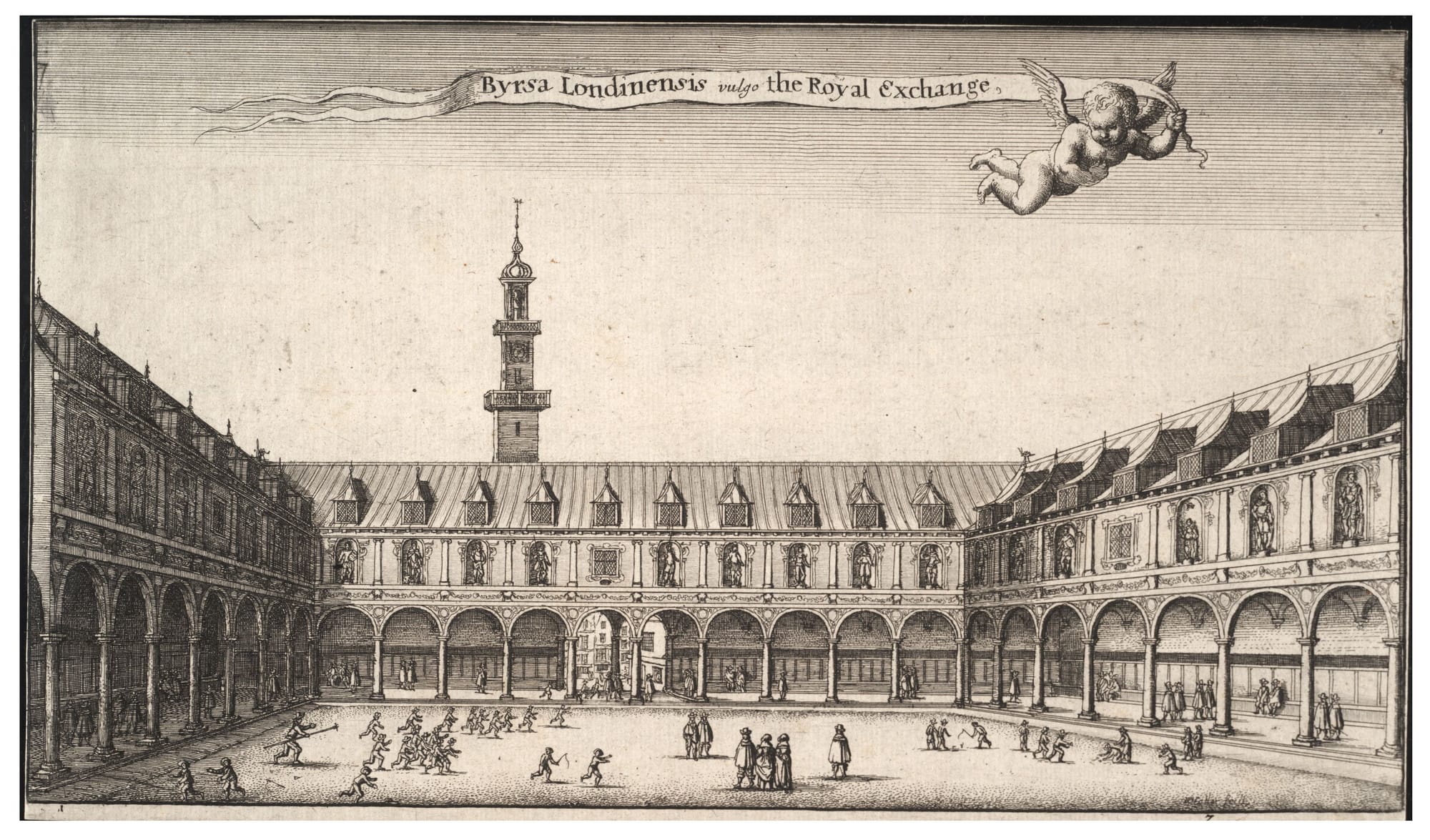
Opening such a business was risky: coffee was a new product and the market was untested. To improve their chances, they chose a location near those already familiar with the drink: the merchants, who gathered around the Royal Exchange, the centre of London’s commercial life. The surrounding streets bustled with trades of every kind, from stationers and booksellers to notaries and lawyers. Yet despite this activity, the social atmosphere was subdued. Under strict Puritan repression, taverns, alehouses, gambling, football matches, and even Christmas celebrations were curtailed. The city needed a new form of social life, and the coffeehouse, which promoted sobriety, conversation, and industriousness, fit well with Puritan values while offering a welcome alternative.
How debate became an integral part of the coffeehouse
One of the most distinctive features of the English coffeehouse was the lively political discussion that took place within its walls. To understand why these establishments became such important spaces of debate, it is necessary to consider the historical moment in which they emerged. When the first coffeehouses appeared in England in the mid-seventeenth century, the country was living through the English Interregnum, a period during which the monarchy had been abolished. The government established under Oliver Cromwell collapsed in 1659, leaving England in a state of political uncertainty. London, in particular, became a city alive with argument, speculation and dissent. In this atmosphere, coffeehouses quickly developed into places where people gathered to voice criticism and debate the direction of the nation.
During the Interregnum, the concept of the club had become popular. These clubs brought together individuals who met in public venues to discuss political ideas and current affairs. Their discussions were often organised and structured, and it was this culture of formalised debate, rather than any single political viewpoint, that helped shape the style of conversation that later characterised coffeehouse life.
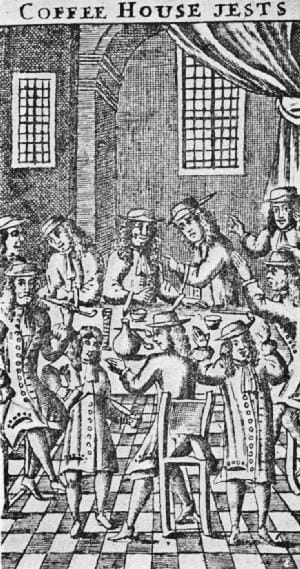
When the monarchy was restored in 1660, however, such gatherings began to attract suspicion. Clubs that openly debated political matters could easily be interpreted as threats to royal authority. The fate of James Harrington illustrates this shift. Harrington, who founded the Rota Club to debate republican political ideas, was eventually imprisoned. Yet by this point, the coffeehouse had already secured its reputation as a place where people could gather freely to exchange opinions. In the popular imagination, it had become a forum in which ordinary men could participate in discussions about the affairs of the state.
Coffee and political debate were not the only reasons people frequented the coffeehouse. What attracted many visitors was the opportunity to socialise. Much like the earlier coffeehouses of the Near East, the English coffeehouse offered a form of companionship distinct from both the private household and the tavern. It provided a semi-public space where individuals could meet, converse, exchange ideas, and even advance their careers, as Samuel Pepys, one of the most prodigious diarists of the time, testifies. They were, in other words, the early modern networking spaces.
A microcosm of ideal sociability
One of the most innovative features of the coffeehouse was its reputation for egalitarianism. In principle, all customers were equal within its walls. This was reflected in the simple seating customs: there were no reserved places, and patrons would simply take the next available seat. Such practices encouraged individuals from different social backgrounds to sit together and engage in conversation. In this sense, the coffeehouse could function as a kind of social leveller, bringing together people who might otherwise never have met.
This equality, however, had clear limits. Women were largely excluded from coffeehouse life. The institution remained overwhelmingly male. For women of respectable status, frequenting a coffeehouse could be seen as compromising their reputation. Women were nevertheless present in some capacities: they sometimes owned coffeehouses, worked as employees, and a few scattered references suggest the presence of prostitutes. There are mentions of a female coffeehouse in the city of Bath, though unfortunately, very little information about it has survived.
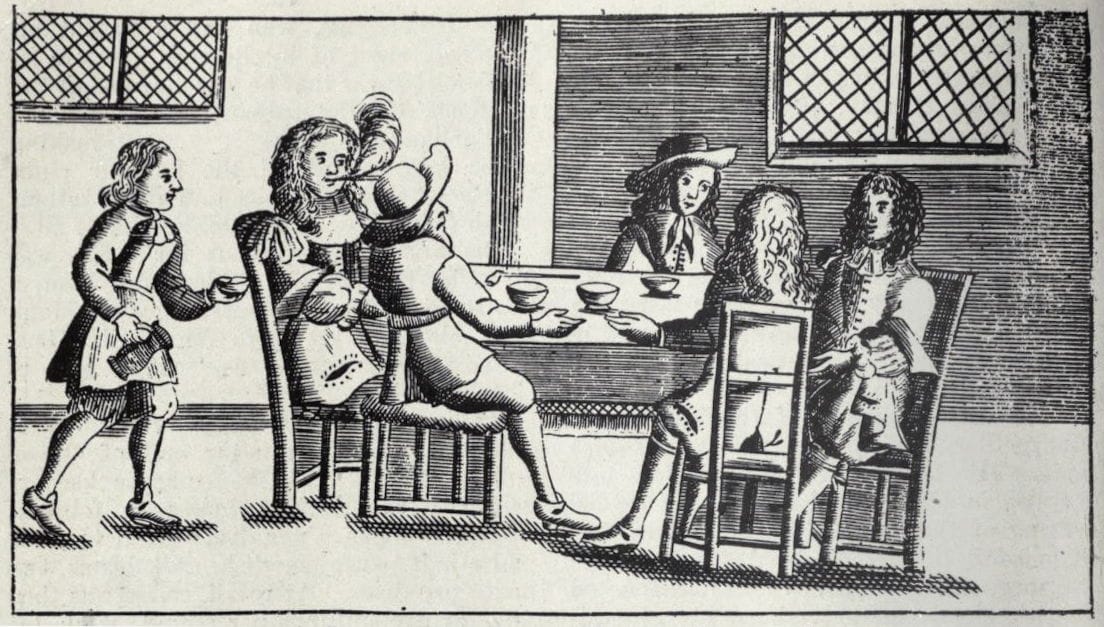
The coffeehouse was also a place of storytelling and lively conversation. Merchants, travellers and sailors often shared tales from distant parts of the world, filling the room with accounts of trade and adventure. Yet these spaces were not always calm or orderly. Coffeehouses could be noisy environments, filled with a constant hum of overlapping conversations. Political arguments were common and discussions could quickly become heated. News and opinions circulated freely among patrons of all social ranks, but the atmosphere was often unruly.
What news have you?
Perhaps the most distinctive feature of the London coffeehouse was its role in the circulation of news. In the later seventeenth century, the business of news reporting was still in its infancy, yet a growing appetite for information was already evident in the English capital. Newspapers were often placed on communal tables for patrons to read, but printed material was only part of the story. Handwritten newsletters, rumours, gossip and political speculation circulated just as widely. Through these conversations, many ordinary citizens became increasingly informed about political affairs. For the first time, large numbers of people were developing a form of political awareness by reading and discussing current events in coffeehouses.
This growing culture of news and debate did not go unnoticed by the authorities. The crown sought to control the flow of printed information through legislation such as the Licensing Act 1662, which attempted to regulate the publication of newspapers and pamphlets. Yet the government was hesitant to suppress the coffeehouses themselves. Despite their reputation as spaces where dissent might flourish, they also generated considerable tax revenue and had become deeply embedded in the social and commercial life of London.
A British institution
As a centre for trade and the exchange of news, a meeting place for merchants, scholars, and curious minds, and an important setting for both commerce and political debate, the coffeehouse quickly became an attractive institution. Coffeehouses spread rapidly beyond the capital, appearing in towns and cities across the country.
By the end of the 1660s, most major urban centres in England had at least one coffeehouse. In a remarkably short time, what had once been an exotic import had become firmly embedded in everyday life. The coffeehouse had established itself as a distinctly British institution.
Penny universities
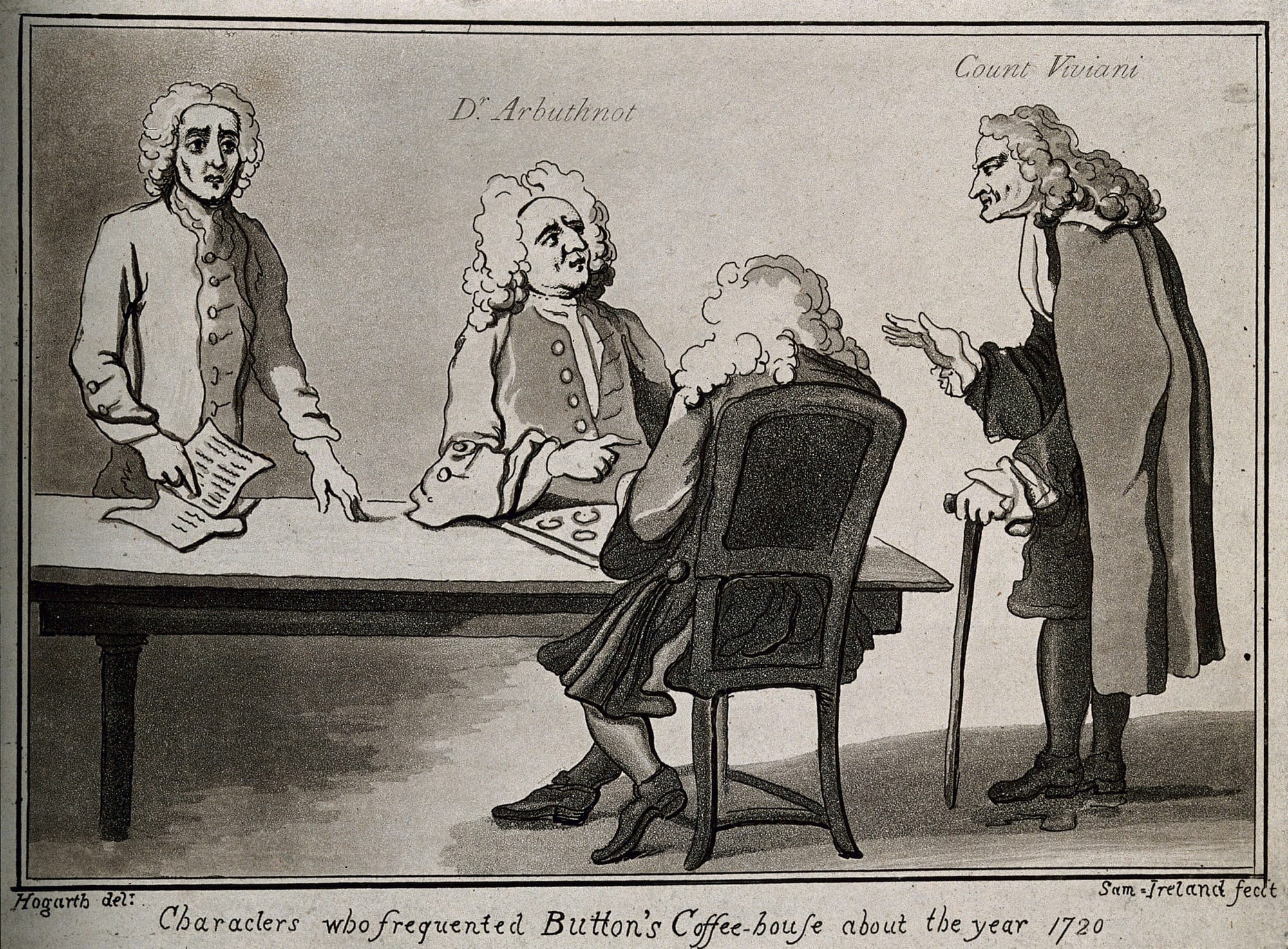
In Britain, the coffeehouse soon became associated not only with debate, news and heated political discussions, but also with learning. These establishments functioned as lively marketplaces of ideas where specialised knowledge circulated freely. Many coffeehouses gradually developed reputations linked to particular interests and attracted regular groups of like-minded visitors. Scholars, scientists, writers and natural philosophers all found their way to these bustling rooms. Wits and poets gathered in the coffeehouses of Russell Street. The famous writer John Dryden presided over discussions at Will’s Coffeehouse near Covent Garden, where aspiring authors flocked and where literary debates were as common as the cups of coffee being served.
The culture of intellectual exchange extended beyond literature. In Oxford during the 1650s, a group of scholars, physicians and clerics formed what they called their “Chemical Club.” They met in the coffee room of the apothecary Arthur Tillyard, discussing experiments and new scientific ideas. From these informal gatherings emerged the beginnings of what would later become the Royal Society, the United Kingdom’s national academy of sciences. Coffeehouses thus played a small but significant role in opening scientific ideas to a wider public.
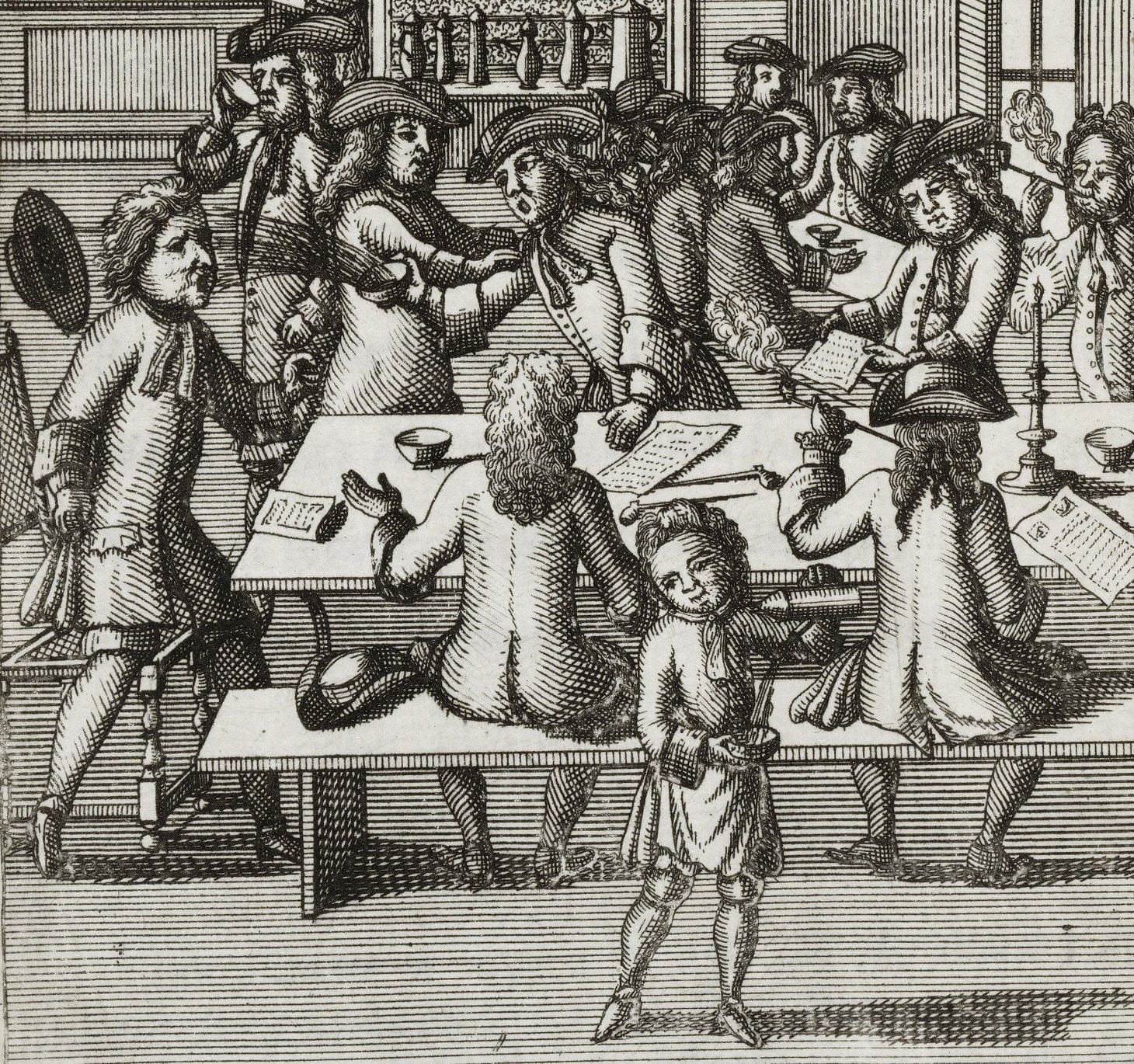
By the 1670s, many coffeehouses hosted scientific clubs and public demonstrations were a familiar sight. For the price of a single cup of coffee, men from very different social backgrounds could listen to debates, learn about discoveries and engage with ideas that might otherwise have remained confined to universities or private circles. It is hardly surprising that these places came to be known as “penny universities.”
Yet the learning that took place in coffeehouses was rarely systematic or structured. Some critics even described this kind of learning as superficial. In that sense, coffeehouses have often been compared to the modern Internet: places where ideas spread rapidly, knowledge is shared widely and misinformation can travel just as easily as truth.
Attempts at suppression
On 29 December 1675, a royal proclamation was issued ordering the suppression of coffeehouses. The accusations included fostering political dissent, rebellious attitudes and idleness. Most troubling to the authorities was the fact that ordinary people were now openly discussing the actions of those at court. The idea that common citizens could form and voice opinions about their rulers was perceived as deeply threatening to the king and his circle.
Yet the situation was not entirely straightforward. Coffeehouses also served the government. Through a network of informants and spies, the authorities could easily monitor what was being discussed within their walls. A complete ban, therefore, risked depriving the government of a valuable source of information.
The potential consequences of such a ban were serious. It would not only have ruined the coffeehouse owners – the “coffeemen” – but also struck a blow to the growing culture of public debate and assembly. Following a hearing before the king on 7 January 1676, the coffeemen agreed to comply with a number of conditions in exchange for the withdrawal of the proclamation. In essence, they were required to act as informants, reporting any seditious or improper conversations as well as suspicious printed or handwritten texts circulating among their customers.
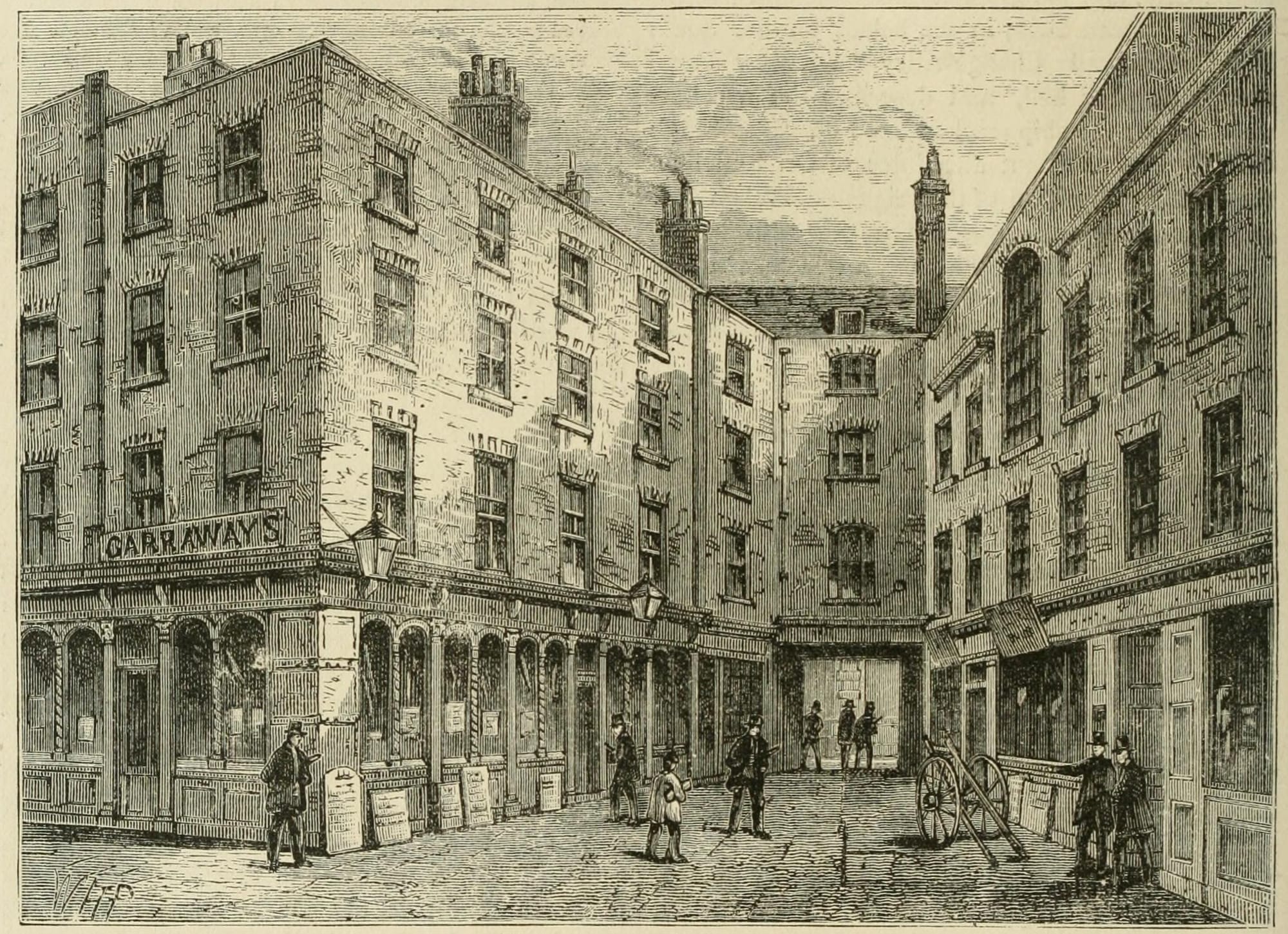
In practice, however, the authorities were not always eager to enforce these rules. Conversations continued, debates persisted and coffeehouses remained lively centres where the affairs of state were discussed. This moment is significant because it marks the first time that ordinary citizens openly engaged in conversations about how they were governed. In many ways, it represents the early emergence of what we now call public opinion.
By the summer of 1676, the coffeehouses of the City had increasingly become gathering places for political opposition. Those critical of the court gravitated towards these spaces, which gradually became associated with criticism of government. The proclamation had failed. For the time being, the coffeehouse remained a place where common people could meet, exchange news and debate the politics of the day.
The coffeehouse dwindles away
By the late eighteenth century, the coffeehouse was clearly in decline. Many blamed the rise of tea, which by 1750 had come to dominate the British market. Yet the change was about more than a simple shift in taste. The coffeehouse had begun to lose something of its unique character. As Ellis suggests, the lively sociability and the political and commercial energy that had once defined these places had simply had their moment and began to lose their allure in the public imagination.
The decline was gradual. Coffeehouses did not suddenly disappear, but their spirit began to fade. The egalitarian atmosphere that had once set them apart slowly gave way to exclusivity. Many coffeehouses transformed into gentlemen’s clubs, no longer open to anyone with a penny for a cup but reserved for a leisured elite. The working poor still found their coffee, but at stalls and taverns rather than in the bustling rooms where merchants, writers and politicians once debated the news of the day. The intellectual buzz that had once filled the coffeehouse grew quieter, and the establishments that remained became more like the cafés we recognise today: places to drink and dine.
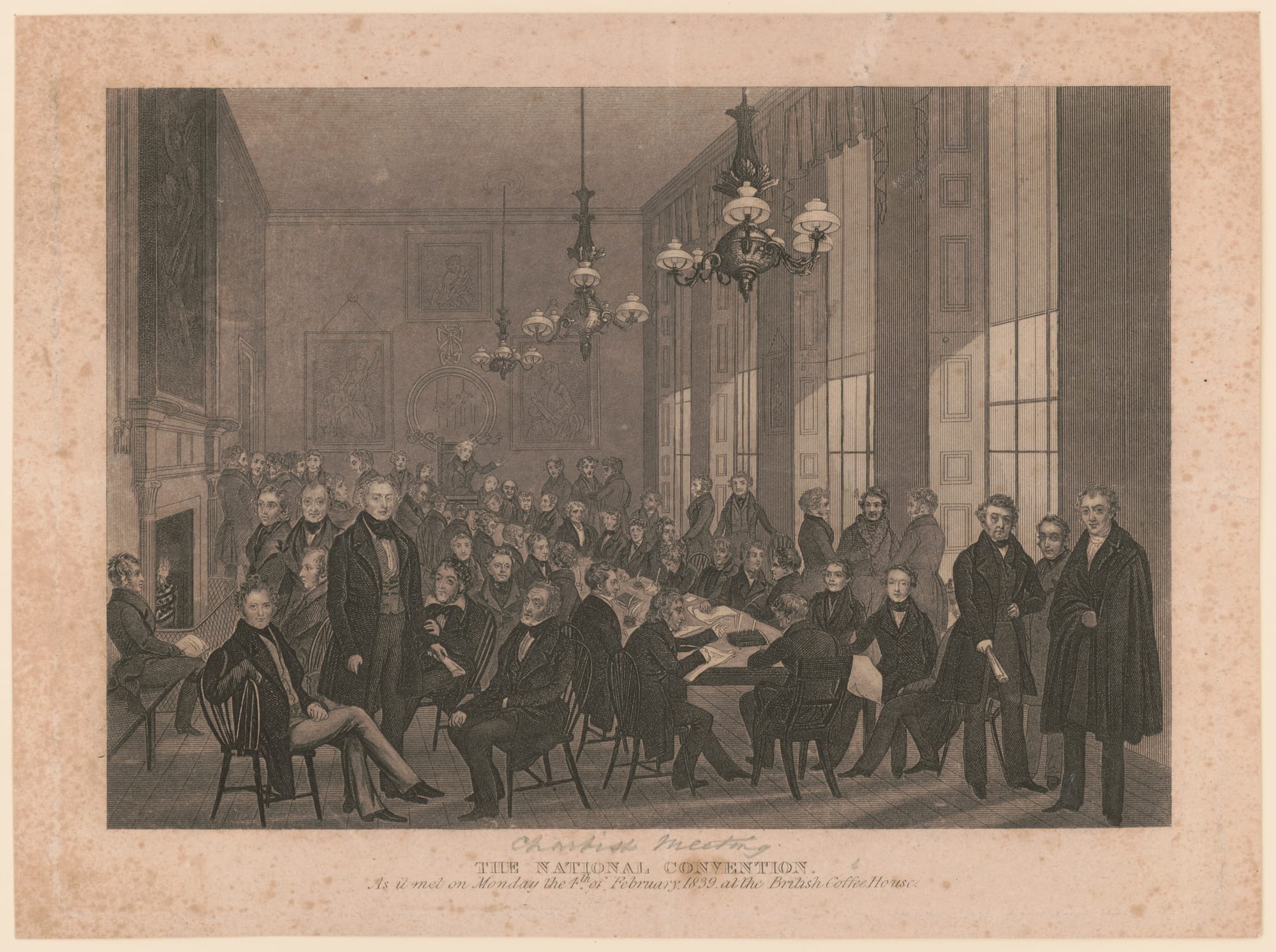
In time, the English coffeehouse slipped into memory. And as often happens with memories, nostalgia soon followed. People began to look back on the coffeehouse with a certain romanticism; historians and enthusiasts started to write about its past. They may not always have agreed on every detail, but most recognised the same thing: that the British coffeehouse had played a remarkable role in shaping freedom of speech, encouraging an egalitarian spirit and giving birth to a new world of public opinion.
As I bid farewell to the British coffeehouse, a mug of hot black tea sits beside my laptop. I’m aware of the contradiction. A devoted coffee drinker myself, I somehow ended up finishing this piece with tea in hand. The irony was unplanned.
Researching this subject has been a sheer pleasure. What I have written here draws on Markman Ellis’s The Coffee-House: A Cultural History. I make no claim to having made new connections or to having cross-checked every possible source. With more time, I might have explored the subject in greater depth, though that would have made this piece longer still.
I try not to fall too easily into the trap of romanticising the past – something I am rather prone to. Yet I cannot help wishing that I could have been there myself, at the moment when these places first began to take shape: the hum of conversation, the smell of roasted coffee and the sense that something new was quietly emerging.
Sources:
The Coffee-House: A Cultural History, by Markman Ellis