Mischief in the Twelve Days

A few days ago, I came across an article in The Guardian about Charles Dickens and Christmas. A mighty combination, I admit. The article explored some of Dickens’ inventions that didn’t ‘make the cut’. These, I've learned, include ghosts, stories of failure and goblins. This last one, Christmas goblins, rang my bells.
It wasn't long before I started reminiscing about the tattered old CD that played again and again every Christmas, making my sister and me laugh our hearts out, play, and secretly shed a tear or two. It was the tales of the Greek Christmas goblins — widely known among the Greeks as ‘kalikantzaroi’ — that got me excited to put together a text about these little mischief makers.
Their story is nothing but noble and a far cry from the courteous, noble-hearted Christmas movie characters, but they can make you laugh if you let them, and that counts for something.
Who are they?
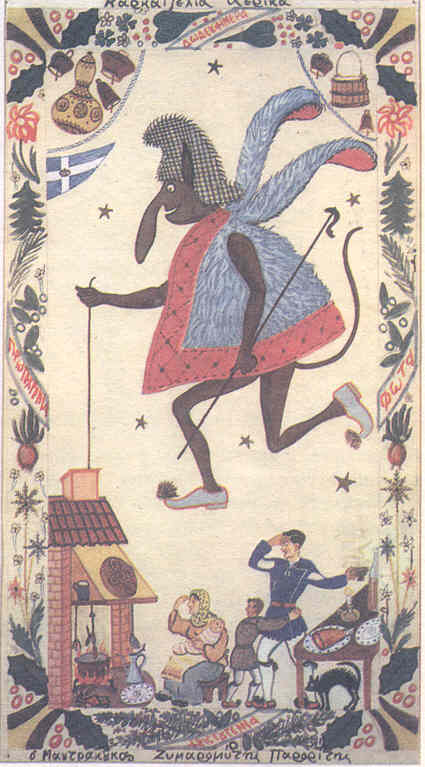
The Greek Christmas goblins are creatures of the night. They are mostly male, but descriptions of their appearance vary. Some imagine them small, others say they are big trolls with dark skin and goat-like legs. In an article in Spiegel International, Von Danylo Hawaleshka gives a compelling explanation about the lack of uniformity when it comes to the appearance of these little beasts: ‘Opinions differ on what they look like, both because of active imaginations and Greece's once-isolated regions, separated by the Hellenic nation's many mountains and vast seas.’ Despite the regional differences, people seem to agree on one thing: kalikatzaroi are all ugly. Every single one of them has its own disgusting foible. And they all have hilarious names that mark their special vices. Adding to this, these little imps are nothing but bright. They are incredibly thick creatures that enjoy playing pranks and wreaking havoc in human households.
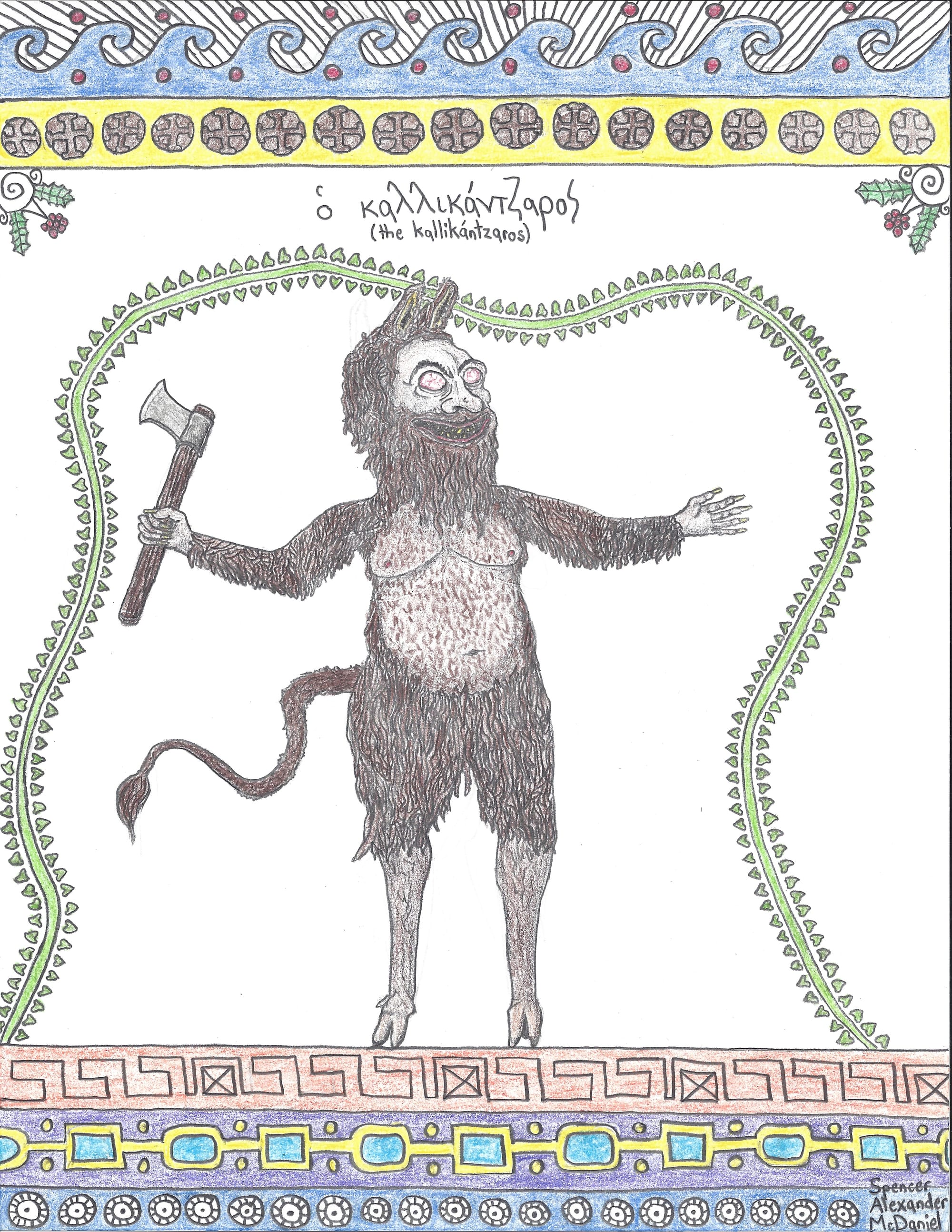
Luckily, you will not find 'kalikantzaroi' all year round. They normally reside under the earth and have only one job: to saw the ‘Tree of Life’, which is said to hold up the world above. When their work is almost done — the tree is about to fall — Christmas Day arrives. They suddenly grow giddy with excitement, forget all about their work, and abandon their axes and saws to finally make it to the surface of the earth. For the next twelve days, their only concern is to wreak as much havoc as possible.
'Kalikantzaroi' sneak out at night and find their way into our houses through windows, down the chimney, through keyholes or any cracks they can find. Τhey are very fast, agile and very noisy. They spill the water, the flour, they piss on the ashes. They are not devils, really, just mischievous little brats.
Protective rituals
Having these little tricksters visiting your house during the holidays is a real nuisance. There are, however, ways to protect yourself. One of the things you can do is to play on their weaknesses. It is rumoured that a quick trick to keep them out of your house is to leave a colander on your doorstep. When the ugly evildoers approach, they will decide to sit and count the holes first. But, alas, these goblins cannot go past number two because if they utter number three, a holy number according to religion, they will have to kill themselves.
Also, they are said to dread the light, so people once believed that keeping the fire log burning all night for twelve days, from Christmas until January 6, would confuse them and drive them away. Other ways of protection include marking the door with a black cross on Christmas Eve, burning a smelly shoe on the fire or hanging stinky pieces of meat behind the front door or in the chimney. But the thing that they dread the most is when, on January 6, the priest blesses the waters to mark the end of the Twelve Days of Christmas.
On the origins
There is no singular origin story about these ugly festive tricksters. There are many theories, but in general, the lore of 'kalikantzaroi' comes from ancient pagan traditions, which have been reshaped to fit Christianity. Legend has it that they are free to roam the world because Christ has not yet been baptised, leaving humanity exposed to evil. But once the day of the Epiphany comes and Christ is finally baptised, they are forced to return to their shadowy world in the underground.
There are sayings that any child born in the Twelve Days of Christmas is in danger of becoming a 'kalikantzaros'. A way to protect the newborn was to bind the baby in tresses of garlic. An even more effective method, people believed, was to christen the child immediately. Ιt has been argued that this was a form of coercion from the Orthodox Church to scare people into christening their children into the Christian religion as early as possible.
It should also be noted here that until the 3rd century AD, there was no custom of christening infants, as one must have accepted the teachings of Christ first. One should, therefore, have been able to make an informed decision about their faith. The tradition of the 'kalikantzaroi' frightened people and reinforced the belief that if a child was not christened in infancy, it would later become one of them.
According to some other Greek beliefs, those who became Christmas goblins were people with bad luck, the monstrous infants and those who died during the Twelve Days or committed suicide. In some regions, they also believe that those who do not have a powerful angel to protect them from Satan were in danger, too.
The Christmas goblins were born of people’s rich imagination – a way to ward off evil, or anything unknown, anything different enough to frighten them – and were given a place in the world for twelve days. They made it into something annoying and unpleasant but not vicious. They gave it the space to be, but also the tools to keep it away.
The lore of 'kalikantzaroi' is fading in our modern world. The log is no longer burning and few children know about the little Christmas tricksters these days. Perhaps we have come to terms with our darkness and the need for fictitious creatures to take responsibility for our mess is no longer needed. Whatever the case, I will secretly raise a glass this year in salute to the Christmas goblins that once fuelled my imagination and added a bit of mischief to the holiday season.