How to treat strangers according to The Odyssey


Everyone has been reading The Odyssey this summer, they say. Even though I haven’t seen anyone carrying it to the beach, I must admit I’ve been one of them. I wasn’t planning on being very vocal about it, let alone write a piece about it. And yet, I found there was something simple and, at the same time, truly remarkable running throughout the whole poem: the concept of hospitality – the ancient Greek custom of welcoming the stranger, offering them food and shelter, and treating them as a guest rather than a threat. I found it beautiful and a tad pertinent to our times.
Philoxenia, or the art of befriending a stranger
Long before the first inn, travellers in ancient Greece didn’t need to worry about accommodation or nourishment. Back then, people embarked on long and sometimes arduous journeys. They travelled frequently; sometimes just to collect information. But they weren’t tourists; they were travellers. Often, they were messengers or even outcasts. It soon grew necessary to establish a reliable practice that would keep them safe in their travels.
So, an elaborate system of rules appeared regarding the treatment of a stranger. It developed into a ritual that everyone had to observe – poor or rich, host or guest. The Greek word was φιλοξενία, which means ‘to befriend what is foreign’. It is often known to the English-speaking world as xenia. Xenia was held in such high regard that it was protected by the father of all gods, Zeus. It was even believed that the stranger could be a god in disguise coming to test if people were following the rites of hospitality or not. Xenia was basically an act of virtue, and trespassers were to expect the gods’ wrath.
The ritual
Greek hospitality, or xenia, followed a well-established set of customs. When a stranger arrived, the host was expected to welcome him warmly, greeting him and shaking his hand. If he had brought a horse, a chariot or a spear with him, the host would make sure these were properly stored and taken care of. The guest would then be offered a bath, usually prepared by the household’s female servants, who would wash him, anoint him with oil and provide him with clean clothes.
The host would then offer his guest a comfortable seat in a place of honour, bring him water to wash his hands and serve him their finest food and drink. On special occasions, the host might even organise, in honour of his guest, a formal feast or even athletic games. It is important to note that the guest was not immediately questioned about his identity or purpose. Only after he was welcomed and fed would he be asked who he was, where he had come from and what he needed. This custom reflected the fundamental principle of xenia: a stranger was to be treated as an equal before anything was known about his identity or social status.

Once the guest had explained his situation, the host would listen carefully to his request and try his best to fulfil it. It was also customary to allow the traveller to stay for as long as he wished. Finally, when the time came for the guest to leave, he would bid him farewell with gifts, symbolic of the friendship that had been established between them. This relationship was reciprocal: the host could expect to be welcomed and offered the same protection and generosity should he ever find himself in his guest’s home.
Homeric hospitality
Nowhere else is the ancient Greek tradition of welcoming and protecting strangers portrayed more vividly than in The Odyssey. The ancient epic poem has often been described as the ultimate book of hospitality. The story centres around Odysseus, king of Ithaca, who, in his attempt to find his way back to his home, lands on many shores and meets with all kinds of people and creatures. His survival depends on the treatment of the strangers he meets where the sea has taken him. Everywhere he comes ashore, we bear witness to his treatment by his host, the observance of the principles of xenia or not.
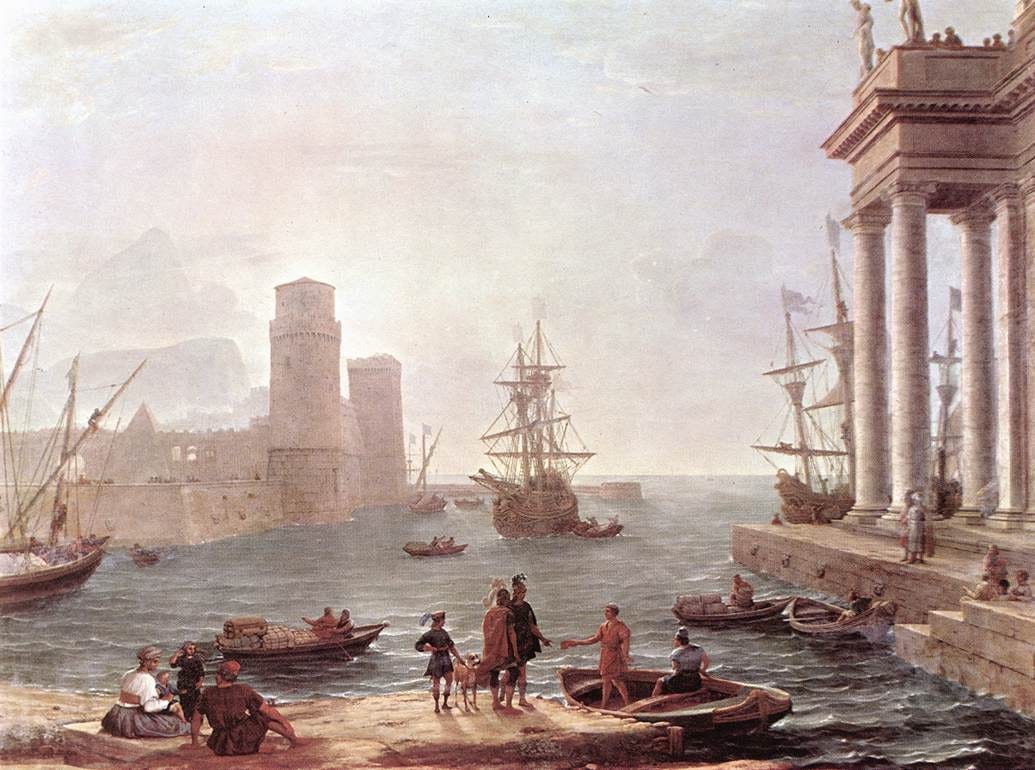
The poem has six major scenes of hospitality, starting with the visit of the goddess Athena, disguised as Mentes, and her acceptance in the palace by Telemachus. It finds its glory when Odysseus drifts to the land of the Phaeacians and is welcomed with utmost respect by King Alcinous and Queen Arete. It culminates with Eumaeus, the swineherd, taking in Odysseus, who returns disguised as a beggar.
Reading The Odyssey brings the principles of xenia to life. The ritual, which had to be followed by everyone – poor or rich, is precise, and it is described in vivid detail in the beautiful poetry of Homer. But so are the consequences for the ones who choose to ignore it.
When hospitality goes awry
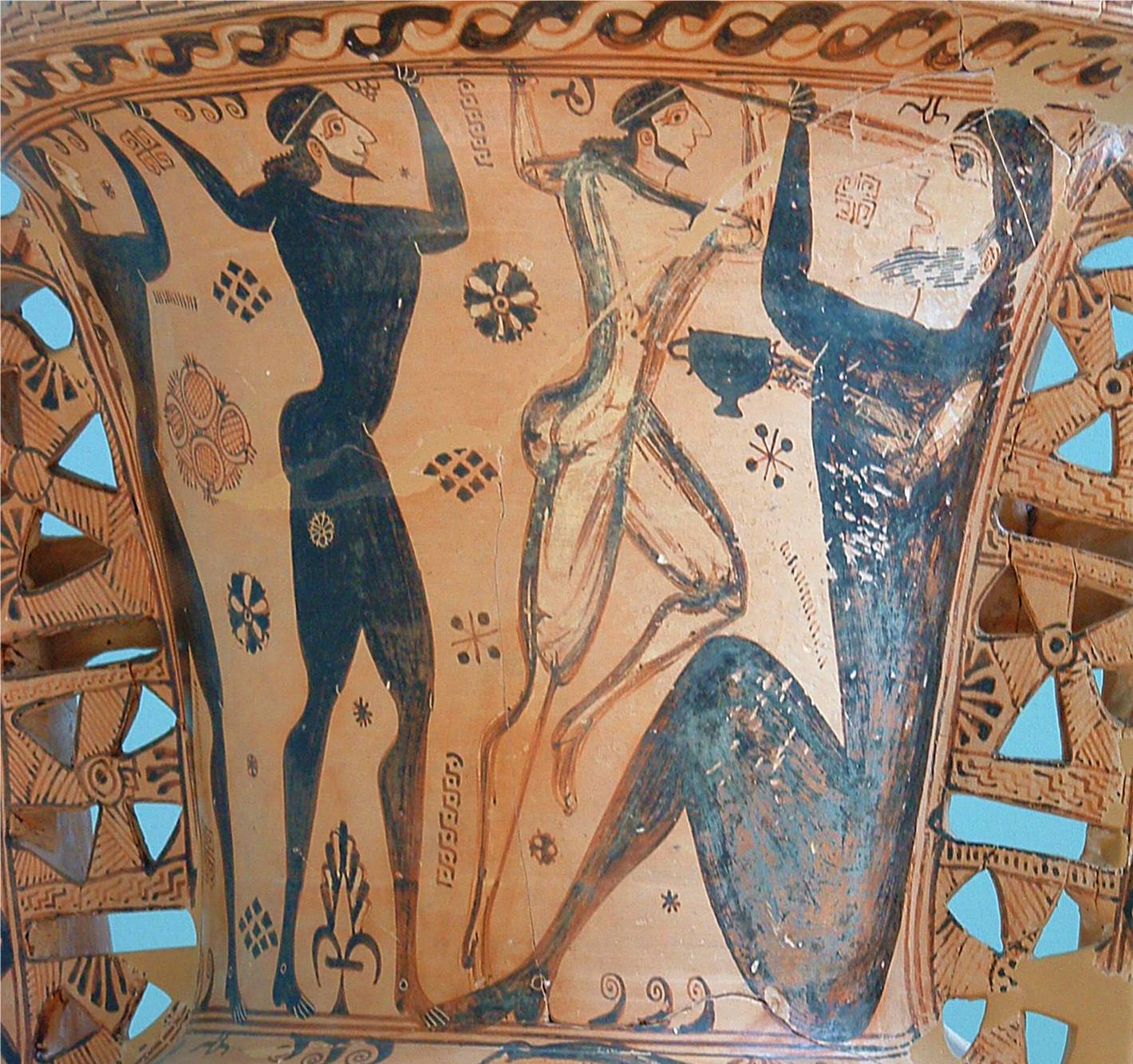
The poem presents two cases of bad hosts, and they are particularly telling. The first one includes the hero’s meeting with the Cyclops, who immediately demands that he and his comrades reveal his identity. He disregards Odysseus’s plea to respect the gods and the customs of hospitality, and eats them alive instead of offering them food and drink. His appalling treatment of strangers leaves him blinded and robbed.
But the hostwasn’t the only one to abide by the rules of good hospitality. The guest had to show equal respect. Homer makes this clear when he describes the behaviour and the fate of the suitors at Odysseus’s palace. These were men who had their eye on Odysseus’s wife and his riches. In the absence of the male leader, they become parasites who take advantage of what is being offered to them in the name of xenia. Their insolence and disrespect leave them brutally slaughtered by Odysseus at the end.
Thoughts on today
This old virtue of hospitality seems quite the ideal to our modern eyes, but it was a social convention necessary to avoid tensions at the time. It helped that people still had the fear of the gods hanging over them, of course. But when I was reading about the kindness and generosity travellers were treated with in the poem, all the food and the wine they were freely given, the baths, the feasts, the gifts, it made me almost nostalgic for a chivalrous past I never came to experience. It looks almost impossible in the world we have created today. And yet, remnants of the old values are still echoing, in bits and pieces, here and there.
I found myself in Crete this summer, and I was reminded by a local that it doesn’t matter if you haven’t got a penny in your pocket; when someone turns up at your home, you put food on the table, you fill up the glasses with wine, and you welcome them as one of your own. This is how things are done in places that fear and the Western world has yet to conquer.
Perhaps the old ideals and conventions have already died. Times have changed; we do things differently today. We may no longer fear the wrath of gods, yet it is good to be reminded that how we treat strangers is more meaningful than we think. As philosopher Jacques Derrida explored in his writings on hospitality: 'there is no culture or social bond without the principle of hospitality'. In an increasingly uniform and isolated world, perhaps welcoming the stranger could be one of the simplest ways to rediscover what connects us.
Further reading
Derrida, J. (2005). The Principle of Hospitality. Parallax, 11(1), 6–9. https://doi.org/10.1080/1353464052000321056